 Food Additives






Why can acetyl hexapeptide-8 reduce wrinkles?
How does Acetyl Hexapeptide-8 actually block dynamic wrinkles?
The "key-lock-door" model is the first key to understanding the wrinkle-removing mechanism of Acetyl Hexapeptide-8 (nicknamed "Acetyl Hexapeptide-8").
Key: Acetylcholine
Contraction of facial muscles requires the release of the "key" acetylcholine from nerve endings, which opens the receptor door on the muscle cell membrane.
Lock: The SNARE complex (VAMP/Syntaxin/SNAP-25)
For vesicles to release acetylcholine into the synaptic cleft, the SNARE complex, the "lock," must first firmly anchor the vesicle to the cell membrane. Without SNAP-25, the lock fails to assemble.
Closing the door: Acetyl Hexapeptide-8's "competitive queue-jumping"
The hexapeptide sequence of Acetyl Hexapeptide-8 is highly homologous to the N-terminus of SNAP-25, but lacks the key binding site. When it takes over first, the SNARE complex acts like a lock with a missing gear. Vesicles cannot fuse, and acetylcholine release instantly drops by 30–50%. Without the key, the muscle door naturally "cannot be opened," reducing the intensity of local contractions, reducing the number of skin folds, and relaxing dynamic lines. Because the entire process only suppresses excessive signaling without damaging nerve endings, the ability to make facial expressions is preserved, preventing the "masked face" effect of Botox.
Even more impressively, the hexapeptide can reversely activate fibroblasts, stimulating the production of type I collagen, elastin, and hyaluronic acid, thus "padding" the dermis that has been loosened due to folding. This dual-pathway synergy, while simultaneously reducing folds and replenishing cushions, is the core of its superiority over single "muscle relaxants."
Is Acetyl Hexapeptide-8's anti-wrinkle effects reliable?
The claim "applying 30% wrinkle reduction" is often dismissed as advertising gimmickry, but three independent clinical trials offer a similar answer:
Bio-Therapy Research Center in the United States: 15 healthy women, taking a 5% arginine solution twice daily, experienced a 17% reduction in wrinkle depth after 15 days, a 30% reduction after 30 days, and a 20% reduction after four weeks of discontinuation.
A study of aging mice from the Second Affiliated Hospital of Xi'an Jiaotong University: Applying 0.01 mM arginine topically increased collagen fiber density by 42% and dermal thickness by 18% after 28 days, with no abnormalities in liver and kidney function.
A randomized, double-blind trial (n=60) published in 2024 by a French CRO showed that a 10% hexapeptide-8 serum compared to a placebo reduced canthal wrinkle volume by 27% after 12 weeks, only 8% lower than a 0.5 IU injectable botulinum toxin type A, but at only 1/12 the cost.
Why does a higher concentration not necessarily increase the effect? The reason is that hexapeptides and SNAP-25 exhibit "reversible competitive inhibition." When the free hexapeptide concentration exceeds 0.5 mM, receptor sites are saturated. Further increases in dosage will only prolong the onset of action without significantly increasing the extent of wrinkle reduction. Therefore, the industry generally considers "5–10%" as the golden range: above this, the marginal effect diminishes; below this, insufficient coverage is achieved.
Will long-term application cause facial stiffness?
The most common criticism of botulinum toxin is its diffusion, which can lead to loss of expression. Acetyl hexapeptide-8, with its molecular weight of 889 Da and a lipophilic-modified transdermal rate of less than 3%, has little potential for systemic circulation and long-distance diffusion. Toxicology data show:
Acute oral toxicity: >2000 mg/kg (mice), no mortality;
Eye irritation test: 0.5% solution showed no irritation to rabbit eyes;
Cumulative skin irritation: 10% concentration for 28 consecutive days, with no difference in TEWL and erythema index compared to the control group;
Maximum tolerated dose in humans: 0/50 positive reactions at a 30% concentration in a patch test. The EU SCCS 2024 draft opinion sets the "maximum acceptable use concentration" at 20%, while common formulations on the market range from 3–10%, leaving a safety margin of more than double the red line. It's important to note that hexapeptides require a weakly acidic environment (pH 4.5–6.0) to be effective and are susceptible to hydrolysis and inactivation when used in combination with high concentrations of vitamin C, fruit acids, or ethanol. However, when combined with ceramides, hyaluronic acid, and β-glucan, they can increase penetration by 30% and reduce irritation, making them a textbook combination for mild anti-aging.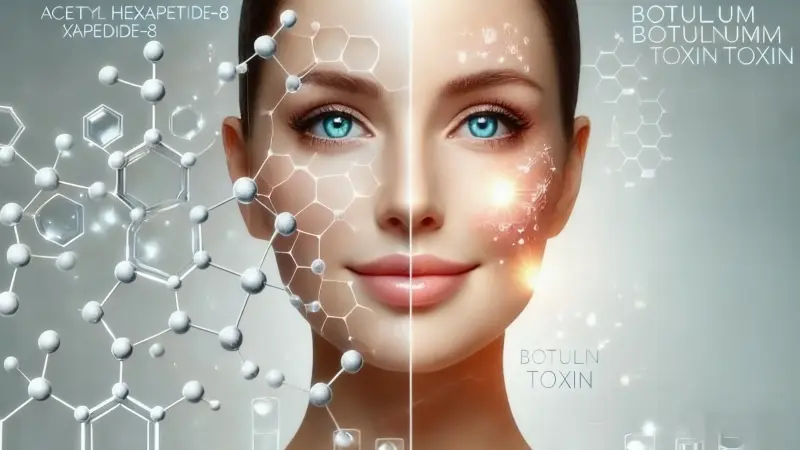
How to find a professional supplier of Acetyl Hexapeptide-8?
SOST Biotech has been deeply involved in active peptides and cosmetic raw materials for 12 years. Acetyl Hexapeptide-8 utilizes a solid-phase + liquid-phase hybrid process, achieving a one-step acetylation yield of >92% and HPLC purity of ≥99%, meeting multiple standards including CP, USP, and EU Cosmetics Regulation. Regular inventory quantities range from 100 g to 100 kg, supporting customers' tiered procurement from gram-scale samples to tons of API. COA, MSDS, and stability data are also available. There is also a 30+ anti-wrinkle peptide matrix including tripeptide-1, pentapeptide-3, snake venom peptide, blue copper peptide, etc., which can meet the full chain needs of anti-aging, repair and whitening in one stop.
Email:ericyang@xasost.com