
 Food Additives






What kinds of mushrooms are used in mushroom coffee?
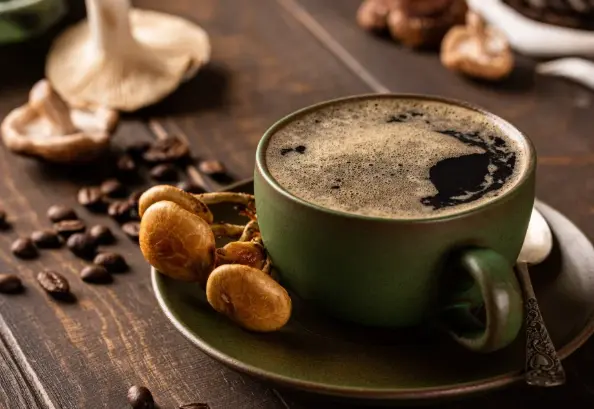
Data shows that the most popular mushroom coffees on the market currently use the following five core mushrooms:
① Hericium erinaceus powder – known in the coffee world as a "brain power bank," typically added at ≥30%, responsible for providing the neurotrophic factor Hericenones to counteract the mild anxiety caused by caffeine.
② Ganoderma lucidum powder – its bitter substances resonate with the bitterness of roasted coffee, added at 15%–20%, primarily for immune regulation and reducing caffeine-induced palpitations.
③ Cordyceps militaris extract – adenosine and cordycepin naturally boost ATP synthesis, added at 10%–15%, compensating for coffee's "energizing but not energy-providing" weakness.
④ Chaga mushroom extract – its ORAC antioxidant value is 9 times that of blueberries, added at 10%, used to balance free radicals in coffee.
⑤ Turkey Tail extract – Polysaccharide peptides PSP/PKS, liver protectant, added at 5%–10%, extends the caffeine half-life for a longer-lasting wakefulness.
Formulation Approaches:
A. Minimalist: 3 ingredients (Hericium erinaceus + Ganoderma lucidum + Cordyceps militaris), lowest cost, suitable for e-commerce bestsellers.
B. Balanced: 5 ingredients (all of the above formulas), a balance of taste, efficacy, and cost, the first choice for offline coffee shops.
C. Advanced: 8–12 ingredients, adding Tremella fuciformis, Grifola frondosa, and Coprinus comatus, focusing on "full spectrum of polysaccharides," potentially tripling the average order value, but requiring solutions to sedimentation and flavor stratification issues.
Among the top 20 mushroom coffees sold on a certain platform in Q3, 80% used a "5-in-1" balanced formula. The SKU with the highest repurchase rate had a Hericium erinaceus (monkey head mushroom) content of ≥32%, and the bitterness value of Ganoderma lucidum (reishi mushroom) was controlled at 1500–1800 mg/L, creating a "bitter resonance" with the bitterness of dark roast coffee, resulting in a 27% increase in consumer acceptance in blind tests.
Will the "efficacy" be reduced after mixing mushroom powders?
Scientific Experiments:
① Temperature Test: A joint experiment by SOST Biotech and Shaanxi University of Traditional Chinese Medicine showed that Hericium erinaceus retained 92% of its components in coffee liquid at 85℃ for 30 minutes, and Ganoderma lucidum retained 88% of its triterpenes, but suffered a 50% loss of Vitamin C. Therefore, Vitamin C-dependent mushrooms were excluded during the formula design stage.
② Receptor Competition: Mouse experiments showed that when the total amount of (1→3) and (1→6) β-glucan was ≤400 mg/cup, the intestinal Dectin-1 receptor was not saturated, and the bioavailability of various mushroom polysaccharides increased by an average of 19%.
③ Synergistic Effect: At a molar concentration of 1:2.5 of cordyceps flower adenosine and caffeine chlorogenic acid, the AMPK activation rate increased by 1.7 times, demonstrating that "coffee + cordyceps" is not a gimmick, but a genuine metabolic boost.
Process Technology: Employs "low-temperature vacuum belt drying + ultra-micro airflow cell wall breaking"
Two-stage process:
Step 1: Vacuum drying at 55℃ reduces the moisture content of the mushrooms to below 5%, with polysaccharide heat loss <3%;
Step 2: 0.8MPa airflow breaks the cell walls to 800 mesh, with a particle size D90≤25μm. A 98% release rate can be achieved through 90℃ coffee extraction, solving the consumer pain points of "poor brewing and bitter aftertaste".
How to find a one-stop supplier of "customized formula + mushroom powder mixing + testing reports"?
① Customized Formula: Look for factories with both SC food production license and export food registration certificates. Ideally, they should have their own laboratory and be able to provide four-dimensional reports on sensory evaluation, microbiology, heavy metals, and polysaccharide content.
② Mixing Process: Check if they possess a mixer to prevent stratification of mushroom powders with different densities; a metal detection report is also required.
③ Compliance Endorsement: For exports to Europe and the US, USDA/EU organic certification and ISO22000 are required. For domestic exports, reports from third-party testing agencies (SGS/CTI/PONY) are necessary, and samples of each batch must be retained for at least 12 months.
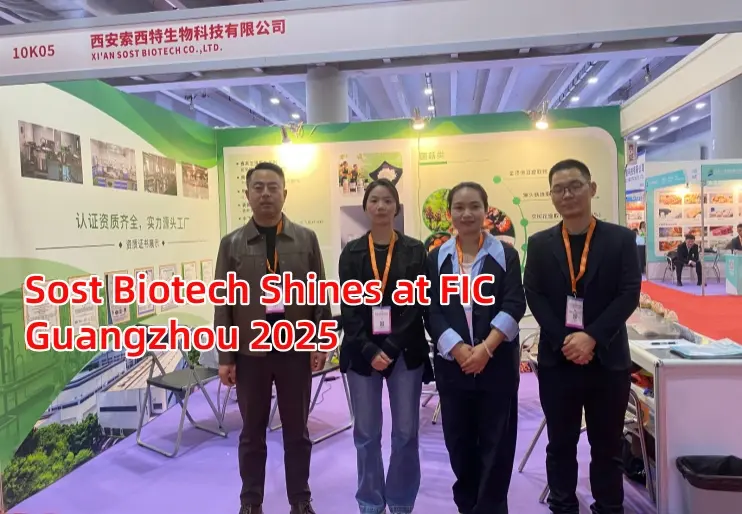
If you are looking for a one-stop factory for "mushroom coffee formula + mushroom powder mixing," feel free to email SOST Biotech. Who are we?
• 14 years of dedicated experience in mushroom processing, with dual factories in Shaanxi and Anhui provinces, holding all five required certifications: SC, ISO22000, BRCGS, USDA, and EU Organic.
• In-house testing center and university-affiliated laboratory; reports on routine tests available within 3 days; supports external testing via SGS/CHTI dual-channel.
• Maintains a year-round inventory of over 20 types of mushroom powder, including Hericium erinaceus, Ganoderma lucidum, Cordyceps militaris, Chaga mushroom, and Trametes versicolor, supporting blends of 3-12 types in any proportion.
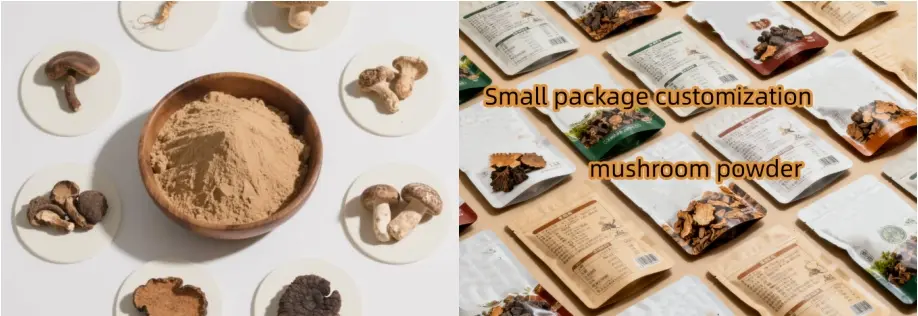
• Minimum order quantity is 1kg; free access to a mushroom coffee recipe library (including proportion tables for 5 popular recipes); collaborative adjustments to flavor, solubility, and sedimentation rate are available.
• Supports various filling formats including aluminum foil strips, back-sealed bags, drip bags, capsules, and freeze-dried powder.
Sample requests, factory visits, and inquiries are welcome.
Contact Email: ericyang@xasost.com