How to Use Tranexamic Acid Powder for Skin Benefits?
Tranexamic Acid Powder has gained attention for its skin benefits. Dr. Emily Carter, a renowned dermatologist, states, "Tranexamic Acid Powder can brighten skin and reduce pigmentation effectively." This statement illustrates the growing recognition of the ingredient in the skincare industry.
Many individuals seek ways to improve their skin appearance. Tranexamic Acid Powder is often used for hyperpigmentation, melasma, and uneven skin tone. Its incorporation into skincare routines can lead to noticeable changes. However, results may vary across different skin types, highlighting the importance of personalized approaches.
Despite its benefits, there are challenges. Some users may experience irritation or sensitivity. This emphasizes the need for skin patch tests before full application. Overall, while Tranexamic Acid Powder shows promise, listening to your skin is essential. Adjusting usage based on individual reactions is crucial for achieving optimal results.
Understanding Tranexamic Acid and Its Skin Benefits
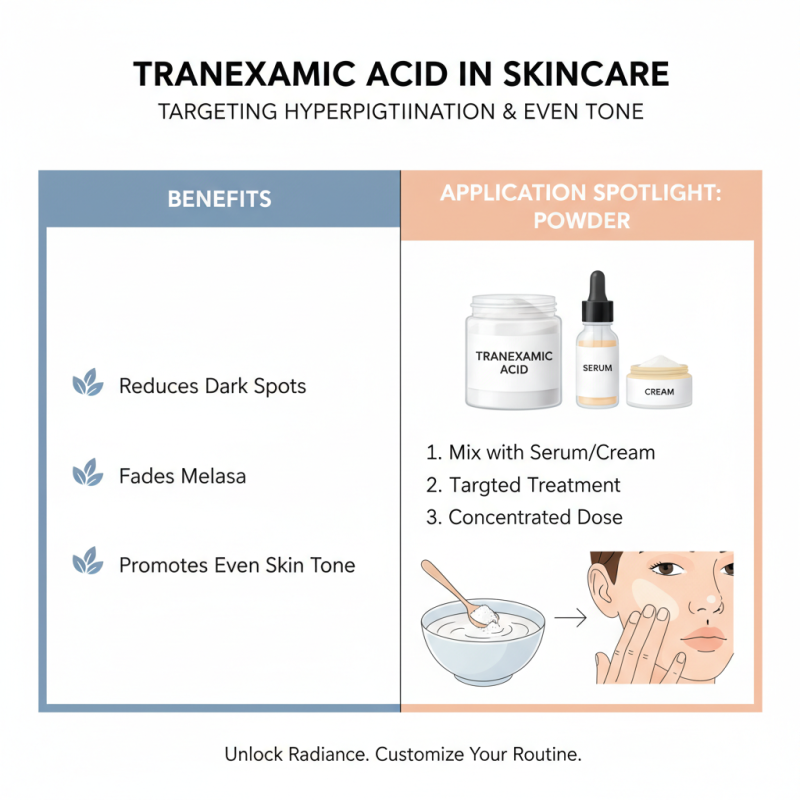
Tranexamic acid is gaining popularity in skincare. It originally treats internal bleeding but shows promise for hyperpigmentation. Many people struggle with dark spots. This acid can help lighten them effectively. It works by inhibiting melanin production. Fewer pigments mean a more even skin tone.
Using tranexamic acid requires care. It's best mixed with a serum or moisturizer. Patch testing is crucial. Skin sensitivities can occur. Start with a small amount to see how your skin reacts. Consistent application is key but don't overdo it. Results take time. Patience is required for noticeable changes.
Remember, not everyone's skin responds the same way. Some might see rapid improvement, while others may not. Monitoring how your skin feels matters. If irritation occurs, stop using it for a while. Skincare is a journey, not a race. Adjustments may be necessary along the way. Embrace the process and enjoy the exploration.
How Tranexamic Acid Works on Skin Pigmentation
Tranexamic acid has gained attention for its role in reducing skin pigmentation. This compound works by inhibiting plasmin, an enzyme involved in the breakdown of fibrin. By doing so, it can reduce melanin production in various skin conditions. This effect makes it particularly useful for treating conditions like melasma and post-inflammatory hyperpigmentation.
When applied topically, tranexamic acid helps to even out skin tone. Users often notice a gradual lightening of dark spots over time. It's important to approach this treatment with patience. Results may not be immediate, and some individuals may experience irritation. Testing a small patch of skin first can help prevent adverse reactions.
Incorporating tranexamic acid into a skincare routine should be done thoughtfully. While it offers benefits, it can also cause dryness if overused. Balancing this ingredient with moisturizers and hydrating products is crucial. Observing how the skin responds is key. Everyone's skin is different, and finding the right balance can take time.
Step-by-Step Guide to Preparing Tranexamic Acid Powder
Tranexamic acid powder is gaining popularity for its skin benefits. Preparing it for topical use can seem daunting, but with a proper step-by-step guide, you can easily make it part of your skincare routine. Start with clean hands and a sterile workspace. This ensures that your preparation remains free from contaminants.
Begin by measuring the desired amount of tranexamic acid powder. A small amount, around 1-2 grams, can be enough for a single application. Mix it with a suitable vehicle, like distilled water or a light serum. Stir gently to dissolve completely. Remember, the mixture's texture may not always be smooth, and some clumps might remain. This can affect application.
After preparing the mixture, conduct a patch test on a small skin area. Wait 24 hours to check for any adverse reactions. If your skin reacts positively, you can incorporate the product into your routine. However, remain aware of how your skin responds over time. Everyone's skin is different, and what works for you might not work for others. Adjust the concentration or frequency based on your experience.
Tranexamic Acid Powder Usage for Skin Benefits
Application Methods for Tranexamic Acid in Skincare
Tranexamic acid is gaining popularity in skincare for its ability to target hyperpigmentation and promote an even skin tone. Application methods for tranexamic acid vary, impacting its efficacy. Among the most common approaches is the use of tranexamic acid powder mixed with serums or creams. This can achieve targeted treatment to problematic areas, providing a concentrated dose of the active ingredient.
Research indicates that tranexamic acid can reduce melasma and other forms of hyperpigmentation effectively. According to a clinical report, a 20% decrease in pigmentation was observed after 12 weeks of consistent use. However, how you apply it matters. For better penetration, dermatologists suggest applying it on clean, slightly damp skin. This enhances absorption, allowing the tranexamic acid to work more effectively.
Another method is combining the powder with oils. This creates a more moisturizing formula that prevents potential dryness. Care in measurement is crucial here; using too much powder may result in an irritating experience. When introducing tranexamic acid, start slowly to gauge your skin's reaction. Not every skin type responds the same way, and some may experience initial redness or sensitivity.
Safety Precautions and Considerations When Using Tranexamic Acid
Using tranexamic acid for skin care can provide several benefits, but safety precautions are essential. This ingredient helps reduce pigmentation and improve skin texture. However, it’s crucial to understand how to use it safely. According to a study published in the *Journal of Clinical and Aesthetic Dermatology*, tranexamic acid can lead to significant improvement in melasma and post-inflammatory hyperpigmentation. Yet, improper application can result in skin irritation and allergic reactions.
Before using tranexamic acid powder, a patch test is recommended. Apply a small amount on your wrist and observe for reactions. Sensitivity varies from person to person. Some users have reported redness or burning sensation, and such reactions should not be ignored. Additionally, consult a dermatologist if you have eczema or sensitive skin. The *American Academy of Dermatology* notes that individuals with these conditions may be at a higher risk for side effects.
Always mix tranexamic acid with a suitable carrier, such as a gentle moisturizer. High concentrations can cause adverse effects. Not everyone will achieve the same results, highlighting the need for caution. Remember, skincare is not a one-size-fits-all process. What works for one person may not work for another. Reflect on your skin's unique needs and adjust usage based on your body’s responses.
How to Use Tranexamic Acid Powder for Skin Benefits? - Safety Precautions and Considerations When Using Tranexamic Acid
| Aspect |
Description |
| What is Tranexamic Acid? |
A medication used to reduce excessive bleeding, known for its skin-lightening properties. |
| Benefits for Skin |
Helps in reducing hyperpigmentation, melasma, and improving overall skin tone. |
| How to Use |
Generally mixed with a carrier serum or moisturizer for topical application. |
| Dosage |
Commonly used in concentrations of 5%-10% in formulations. |
| Safety Precautions |
Patch test recommended; avoid use in case of known allergies or certain skin conditions. |
| Potential Side Effects |
Mild irritation, redness, or allergic reactions in sensitive individuals. |
| Application Frequency |
Usually applied once or twice daily, depending on skin tolerance. |
| Consult a Professional |
Always advisable before starting treatment, especially for sensitive skin types. |

 Food Additives