7 Proven Tips on Utilizing Polydeoxyribonucleotide for Enhanced Skin Rejuvenation
In the ever-evolving landscape of skincare, the role of innovative ingredients in promoting skin rejuvenation cannot be overstated. Among these, Polydeoxyribonucleotide (PDRN) has emerged as a groundbreaking compound, captivating the attention of dermatologists and cosmetic researchers alike.
Dr. Emily Chen, a leading expert in regenerative medicine, emphasizes the potential of PDRN, stating,
"The unique properties of Polydeoxyribonucleotide allow for accelerated healing and revitalization of the skin, making it a game changer in aesthetic treatments."
PDRN, derived from salmon sperm DNA, harnesses the natural mechanisms of cell repair and regeneration, leading to remarkable enhancements in skin texture and overall appearance. As the demand for
non-invasive rejuvenation techniques rises, understanding and effectively utilizing Polydeoxyribonucleotide can provide significant benefits for both practitioners and clients.
In this article, we will explore
seven proven tips on how to leverage the power of PDRN, ensuring optimal outcomes and a radiant complexion in the pursuit of youthful skin.
Understanding Polydeoxyribonucleotide: The Science Behind Skin Rejuvenation
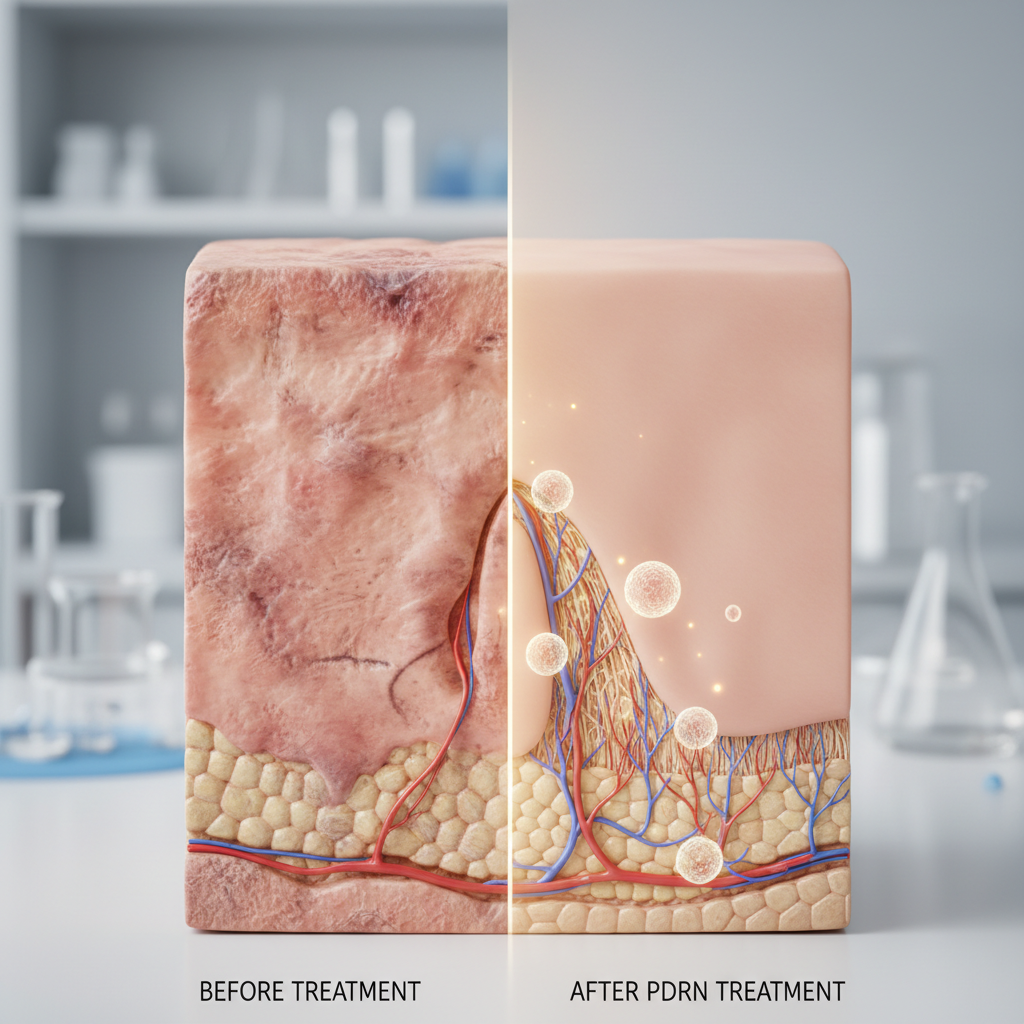
Polydeoxyribonucleotide (PDRN) has emerged as a significant player in skin rejuvenation therapies, owing to its biological properties and mechanisms that promote healing and repair. Derived from salmon sperm DNA, PDRN is rich in nucleotides that have been shown to stimulate cell proliferation, enhance angiogenesis, and reduce inflammation. This unique profile makes PDRN particularly effective in addressing various skin concerns, such as fine lines, wrinkles, and overall skin texture.
The scientific basis for PDRN's efficacy lies in its ability to activate several key signaling pathways involved in tissue regeneration. When applied topically or injected, PDRN interacts with specific receptors on skin cells, prompting them to increase collagen and elastin production, which are essential for maintaining skin structure and elasticity. Additionally, PDRN’s anti-inflammatory properties help to soothe irritated skin, making it suitable for post-procedural care as well. As a result, PDRN offers a multifaceted approach to skin rejuvenation, combining cellular repair with a reduction in visible signs of aging.
7 Proven Tips on Utilizing Polydeoxyribonucleotide for Enhanced Skin Rejuvenation
| Tip No. |
Tip Description |
Benefits |
Application Frequency |
| 1 |
Combine with Hyaluronic Acid |
Enhances hydration and skin plumpness |
Daily |
| 2 |
Use Post-Procedure |
Accelerates healing after treatments |
As needed |
| 3 |
Incorporate into Serums |
Boosts overall skin rejuvenation effects |
Twice a week |
| 4 |
Apply with Microneedling |
Enhances penetration and results |
Monthly |
| 5 |
Combine with Antioxidants |
Enhances skin protection and repair |
Daily |
| 6 |
Use in conjunction with Retinol |
Enhances turnover and reduces irritation |
Every other night |
| 7 |
Utilize in Professional Treatments |
Maximizes results with professional support |
As advised by practitioner |
Top 3 Clinical Applications of Polydeoxyribonucleotide in Dermatology
Polydeoxyribonucleotide (PDRN) has emerged as a revolutionary biomaterial in dermatology, primarily known for its role in skin rejuvenation and wound healing. One of the top clinical applications of PDRN is in the treatment of scars, including acne scars. By promoting cell proliferation and modulating fibrosis, PDRN enhances the skin's natural healing process, leading to a significant improvement in scar texture and appearance.
Another significant application is in combating signs of aging. PDRN facilitates tissue regeneration and increases hydration by stimulating the production of collagen and elastin, which are crucial for maintaining skin elasticity and firmness. This makes it an ideal choice for aesthetic procedures focusing on skin laxity and wrinkles.
Finally, PDRN is also utilized for its anti-inflammatory properties in conditions such as eczema and psoriasis. By regulating inflammatory responses, PDRN helps in soothing irritated skin and accelerating recovery. With its multifaceted applications, PDRN represents a promising advancement in dermatological treatments, offering patients a viable option for enhanced skin health and aesthetics.
5 Key Benefits of Using Polydeoxyribonucleotide for Aging Skin
Polydeoxyribonucleotide (PDRN) has garnered attention in the skincare industry due to its remarkable benefits for aging skin. One of the key advantages of PDRN is its ability to promote skin regeneration. According to a study published in the *Journal of Cosmetic Dermatology*, PDRN stimulates fibroblast activity, leading to increased collagen synthesis. This process can enhance skin elasticity and reduce the appearance of fine lines, providing a youthful glow.
Another significant benefit of PDRN is its skin healing properties. The same study highlighted that PDRN can accelerate wound healing and tissue regeneration, making it beneficial for post-procedure recovery in cosmetic treatments such as microneedling or laser therapy. This healing effect can also help diminish scars and improve overall skin texture. Furthermore, PDRN contains adenosine, which has anti-inflammatory effects, reducing redness and irritation in aging skin, thereby ensuring a smoother and more even complexion.
Research published in *Dermatology Times* indicates that patients experienced a 30% improvement in skin hydration and texture after PDRN treatments within a month. With these compelling benefits, PDRN is emerging as a potent solution for those seeking to rejuvenate their skin effectively.
Best Practices for Administering Polydeoxyribonucleotide Treatments
When considering the administration of Polydeoxyribonucleotide (PDRN) treatments for skin rejuvenation, there are several best practices to ensure optimal results. Firstly, it is crucial to assess the individual patient's skin condition and treatment goals. A thorough consultation allows practitioners to tailor the PDRN treatment to the unique needs of the patient, ensuring a customized approach that enhances efficacy.
It is also recommended to combine PDRN with other rejuvenation techniques, such as microneedling or PRP (platelet-rich plasma), to maximize the overall regenerative effects on the skin.
Moreover, proper dosage and injection technique play a vital role in the success of PDRN treatments. Practitioners should follow established protocols for the concentration and volume of PDRN administered, along with precise injection depths to avoid complications and enhance absorption.
Post-treatment care is equally important; advising patients on adequate hydration and sun protection can significantly improve the longevity of results. By adhering to these best practices, healthcare providers can optimize the benefits of PDRN for skin rejuvenation, delivering notable improvements in skin texture and appearance.
Comparing Polydeoxyribonucleotide to Traditional Skin Rejuvenation Methods
When it comes to skin rejuvenation, traditional methods have long been favored for their effectiveness. However, with the emergence of innovative treatments, polydeoxyribonucleotide (PDRN) is gaining attention for its unique properties. Unlike classic options such as chemical peels and laser therapy, which primarily focus on exfoliating and resurfacing the skin, PDRN works at a cellular level to promote healing and regeneration. This makes it an ideal choice for individuals seeking a more holistic approach to skin health.
One of the key tips for utilizing PDRN in your skincare routine is to integrate it with existing treatments. Combining PDRN with microneedling can enhance absorption and optimize results, ensuring that the skin receives the maximum benefits of rejuvenation. Additionally, individuals should consult with a dermatological expert to tailor the PDRN application to their specific skin concerns, whether it’s pigmentation, dryness, or fine lines.
Moreover, incorporating PDRN into post-operative care can significantly aid recovery. For those who undergo traditional rejuvenation procedures, using PDRN can accelerate healing, reduce inflammation, and enhance overall skin quality. As the aesthetic landscape evolves, understanding how PDRN compares to traditional methods can help individuals make informed choices for their skin rejuvenation journey.
Comparison of Skin Rejuvenation Methods
This chart illustrates the effectiveness of Polydeoxyribonucleotide (PDRN) compared to traditional skin rejuvenation methods based on user satisfaction ratings. Ratings are based on a scale of 1 to 10, where 10 represents the highest satisfaction level.

 Food Additives