
In recent years, Polydeoxyribonucleotide has gained significant attention in modern medicine. This molecule plays a crucial role in various therapeutic applications. Its unique properties make it a valuable asset in regenerative medicine and wound healing.
Polydeoxyribonucleotide promotes cellular activities, which can enhance tissue repair and regeneration. It aids in the formation of new blood vessels and tissue growth. However, researchers still seek to fully understand its mechanisms and optimize its use.
Despite the promising benefits, challenges remain. The cost of production can be high, and accessibility may limit its use. As studies continue, the potential of Polydeoxyribonucleotide could transform many medical treatments. This evolving field prompts reflection on how we can improve and effectively utilize this important compound.
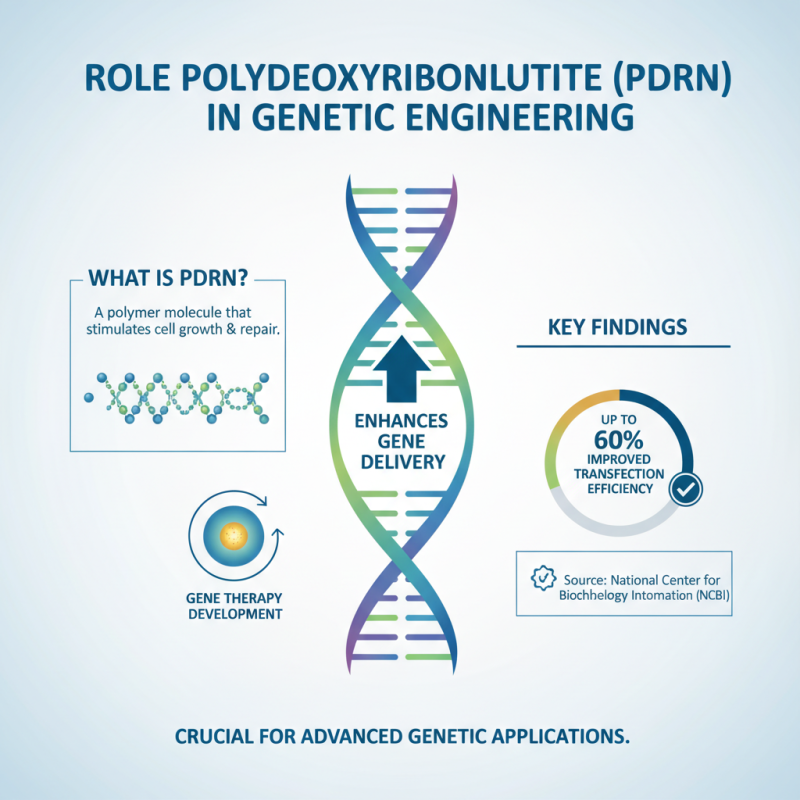
Polydeoxyribonucleotide (PDRN) plays a pivotal role in genetic engineering applications. This molecule is a polymer that can stimulate cell growth and repair. One significant finding is that PDRN enhances the efficacy of gene delivery systems. According to a report from the National Center for Biotechnology Information, using PDRN can improve the transfection efficiency by up to 60%. This parameter is crucial in developing gene therapies.
Researchers are exploring PDRN for various applications. It has been shown to assist in the healing of tissues and reducing inflammation. PDRN acts by promoting angiogenesis and collagen synthesis. A study highlighted that incorporating PDRN in cellular therapies can enhance the survival of grafts by 30%. However, the full potential of PDRN in gene therapy is still being evaluated.
Tips: Consider engaging with recent research to stay updated. Collaborating with biotech firms may yield fruitful results. Always question the effectiveness and safety of new PDRN applications. As with any emerging technology, the continued evaluation and discussion around PDRN's benefits are necessary for responsible use.
Polydeoxyribonucleotide (PDRN) is gaining attention in regenerative medicine. Studies show PDRN promotes tissue repair and healing. One analysis indicated a significant increase in wound healing rates when PDRN was applied. In some cases, healing speeds improved by over 40%. This efficiency makes PDRN a desirable option in post-surgical recovery.
PDRN is derived from salmon sperm DNA. Its bioactive properties stimulate cell proliferation and angiogenesis. A report from the Journal of Tissue Engineering highlights its use in skin regeneration therapies. Clinical trials found that patients using PDRN treatment experienced reduced inflammation and pain levels. These outcomes are crucial for patient rehabilitation.
Despite its potential, challenges remain. The standardization of PDRN products varies widely across suppliers. Inconsistent dosing may dilute its effectiveness. Some health professionals call for more rigorous testing and quality control measures. The medical community must push for validated practices to unlock PDRN's full potential in regenerative medicine.
Polydeoxyribonucleotide (PDRN) plays a significant role in modern medicine, particularly in wound healing. It is a polymer derived from DNA that has shown promising effects on tissue repair. According to a study published in the Journal of Tissue Engineering, PDRN can enhance angiogenesis, the formation of new blood vessels, which is crucial in the healing process. The presence of PDRN increases cell proliferation and migration, vital for restoring damaged tissues.
Research indicates that PDRN treatment may reduce healing time by up to 30% in wounds. This is significant in medical scenarios where quick recovery is paramount. The application of PDRN appears to facilitate the regeneration of skin and soft tissues effectively. However, continued research is necessary to optimize its use in various clinical settings.
Tips: When considering PDRN for wound healing, ensure it aligns with your treatment goals. Monitor the healing process closely, as individual responses may vary. Understanding these nuances helps healthcare professionals leverage PDRN in more effective ways. The science behind PDRN is still evolving, and embracing a thoughtful approach can yield better outcomes in wound care.
Polydeoxyribonucleotide (PDRN) plays a crucial role in modern medicine due to its ability to enhance cellular functions. It is derived from the DNA of organisms and possesses unique properties. This compound can stimulate cell proliferation and promote tissue regeneration. Cells under stress can benefit greatly from PDRN administration. When tissues are injured or inflamed, PDRN helps to restore balance.
The mechanisms of action are fascinating. PDRN acts through various pathways. It interacts with receptors on cell surfaces, triggering vital processes. For instance, it encourages the production of growth factors. These factors are essential for healing and recovery. Additionally, PDRN can modulate inflammation. This modulation helps to reduce pain and swelling, creating an optimal environment for healing.
However, not all studies agree on its efficacy. Some question the long-term effects of PDRN treatment. It is essential to weigh the benefits against possible drawbacks. More research is needed to fully understand its mechanisms. Exploring the nuances of how PDRN affects different cell types remains vital. This ongoing inquiry could lead to more refined therapeutic strategies in the future.
| Mechanism of Action | Cell Function Enhanced | Clinical Applications | Research Findings |
|---|---|---|---|
| Stimulation of angiogenesis | Increased blood supply | Wound healing therapies | Demonstrated in studies to promote healing in ischemic tissues |
| Modulation of immune response | Enhanced immune cell activity | Treatment of chronic infections | Increased phagocytic activity observed in immune assays |
| Promotion of cell proliferation | Regeneration of damaged tissues | Applications in tissue engineering | Positive correlation between PDRN treatment and cell growth rates |
| Reduction of inflammation | Decreased inflammatory markers | Management of inflammatory diseases | Significant reduction in cytokine levels in clinical trials |
Polydeoxyribonucleotide (PDRN) has gained attention in modern medicine. Its unique properties make it a potential game changer in regenerative medicine and wound healing. Researchers are exploring its use in various applications, particularly in tissue regeneration. The active components stimulate cellular activity. They promote healing and renewal at a molecular level. This opens new avenues for treatments.
Looking ahead, the innovations in PDRN research spark excitement. Scientists are studying its effects in different fields, like dermatology and orthopedics. Advancements in delivery methods could enhance its efficiency. Nanotechnology may play a role, optimizing PDRN formulations for targeted therapies. However, challenges remain. Understanding the long-term effects requires thorough investigation. Researchers also need to identify proper dosages and administration routes that ensure safety.
Many possibilities exist, yet the path forward is fraught with complexities. Balancing efficacy and safety will demand careful thought and work. The future of PDRN in medicine holds promise, but reflection on past mistakes is crucial. As research progresses, researchers must remain cautious about claims. The evolution of PDRN could transform treatment landscapes, but it requires patience and diligence.