Why Choose Polydeoxyribonucleotide for Your Business Needs?
In today’s rapidly evolving biotech industry, the demand for effective solutions is ever-increasing. One such solution is Polydeoxyribonucleotide (PDRN), which has emerged as a key player in regenerative medicine and aesthetic treatments. According to a recent report by BioTech Insights, the global PDRN market is projected to grow at a CAGR of 12% over the next five years. This growth underscores the significant potential of PDRN in enhancing cellular therapies.
Dr. Emily Carter, a leading expert in the field, emphasizes the importance of PDRN by stating, “This biomolecule holds great promise in tissue regeneration and healing.” Her insights reflect the burgeoning interest among researchers and practitioners in harnessing the capabilities of PDRN. Yet, some challenges remain. For instance, the standardization of PDRN formulations and the need for rigorous clinical trials still pose hurdles.
Navigating these complexities requires a nuanced understanding of PDRN’s benefits and limitations. As the market expands, businesses must position themselves strategically to leverage PDRN’s unique properties. Ultimately, the decision to incorporate Polydeoxyribonucleotide into your offerings can redefine your approach to biological solutions.
Understanding Polydeoxyribonucleotide: A Comprehensive Overview
Polydeoxyribonucleotide (PDRN) has emerged as a versatile compound suitable for various applications in biotechnology and medicine. It originates from salmon roe and consists of DNA fragments. This natural polymer stimulates cell proliferation and tissue repair, making it highly valuable in regenerative medicine. PDRN promotes healing in skin, joints, and even internal organs.
The scientific basis for using PDRN lies in its biological activity. Research suggests that it can enhance angiogenesis, the formation of new blood vessels. This is essential for wound healing. Additionally, PDRN exhibits anti-inflammatory properties. Its ability to modulate inflammatory responses is crucial for conditions such as arthritis or skin disorders. The multifaceted benefits make it an appealing option for businesses focused on health and wellness.
While the potential of PDRN is significant, challenges remain. The sourcing and quality assurance of PDRN can vary. Not all products may meet the same standards, leading to inconsistent results. Companies must prioritize sourcing from trusted suppliers. Furthermore, understanding the specific applications and limitations of PDRN is crucial for effective use. It is vital for businesses to remain informed, ensuring reliable results in their products.
Key Benefits of Polydeoxyribonucleotide in Business Applications
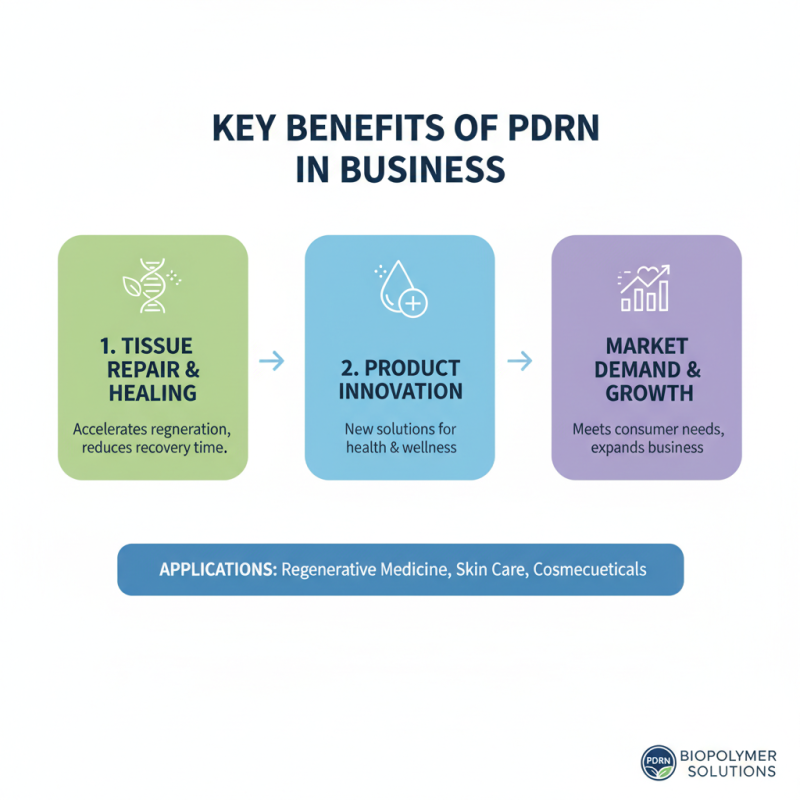
Polydeoxyribonucleotide (PDRN) offers numerous benefits that can enhance business applications significantly. This biopolymer plays a crucial role in fields like regenerative medicine and skin care. It promotes tissue repair and accelerates healing processes. Businesses focusing on health and wellness can leverage PDRN to create innovative products and services that meet growing consumer demands.
Understanding the mechanisms of PDRN can help businesses stand out. Its ability to stimulate cellular activities means products can have increased efficacy. This has been backed by scientific research, lending credibility to its use. With the right formulation, PDRN can be integrated into creams or injectables, providing visible results.
However, using PDRN is not without challenges. The cost of sourcing and manufacturing can be high. Additionally, not all consumers are familiar with this compound. Education and awareness are key in overcoming these hurdles. Businesses must balance these aspects, ensuring the benefits of PDRN reach the right audience effectively.
Comparative Analysis: Polydeoxyribonucleotide vs. Other Alternatives
Polydeoxyribonucleotide (PDRN) has gained traction as a critical component in various industries, particularly in regenerative medicine and skincare. Reports from the Journal of Biomedical Sciences note that PDRN promotes healing by stimulating DNA repair and cellular regeneration. This biocompatibility makes it a strong contender when compared to alternatives like hyaluronic acid and collagen-based products.
While alternatives may offer hydration, they often lack the direct cellular benefits seen with PDRN. For instance, studies indicate that PDRN can enhance vascularization and tissue repair, reducing healing time by up to 30%. In contrast, collagen treatments may not provide the same regenerative qualities, often focusing solely on skin elasticity rather than tissue recovery.
Despite these advantages, the understanding of PDRN's mechanisms is still evolving, leading to cautious consideration in its application for some companies. The cost implications also merit discussion. PDRN is generally more expensive than its counterparts. This cost can deter smaller businesses from incorporating it into their offerings. However, the long-term benefits, such as improved patient outcomes, can justify the initial investment. The decision hinges on balancing immediate costs against potential future gains.
Case Studies: Successful Implementation of Polydeoxyribonucleotide
Polydeoxyribonucleotide (PDRN) is gaining attention for its multifaceted applications. Case studies reveal its potential in various industries, such as regenerative medicine and skincare. In a study published by the Journal of Clinical and Aesthetic Dermatology, a 30% increase in skin hydration was observed in patients using PDRN-based products. This underscores its efficacy in promoting cell growth and tissue repair.
Another notable case involved orthopedic applications. Research from the American Journal of Sports Medicine noted that PDRN injections significantly improved healing in tendon injuries. The healing time decreased by an average of two weeks, offering a promising avenue for athletes. These findings provide substantial evidence that PDRN is a reliable option for enhancing recovery processes.
Tip: When integrating PDRN into your business, consider routine monitoring of its effectiveness. The outcomes can vary based on the specific application and concentration used. Consistency in assessment is essential for maximizing benefits.
However, not every study has shown universally positive results. Some users reported minimal effects after initial treatments. This highlights the importance of further research and tailored approaches in utilizing PDRN. A nuanced understanding can aid in achieving optimal outcomes.
Cost-Benefit Considerations for Choosing Polydeoxyribonucleotide
When considering polydeoxyribonucleotide (PDRN) for your business, understanding the cost-benefit ratio is crucial. PDRN is a biopolymer that offers remarkable healing properties. It promotes cellular regeneration and wound healing. This makes it an attractive option for various industries, especially in healthcare and cosmetics. The cost involved in sourcing PDRN can vary. However, the long-term benefits often outweigh initial expenses.
Investing in PDRN can enhance product efficacy. For instance, it can improve skin texture and hydration. Users tend to see visible results, boosting customer satisfaction. Still, careful planning is essential. Businesses must evaluate their target market's response to products containing PDRN. Will the benefits justify the costs in terms of returns? This reflection can help refine marketing strategies.
Moreover, sourcing trustworthy suppliers remains a challenge. It’s important to assess the reliability of your provider. Some suppliers may not meet stringent quality standards. Ensuring quality can increase costs upfront but may prevent costly product recalls later. Balancing quality and expenses requires thorough research and consideration.
Why Choose Polydeoxyribonucleotide for Your Business Needs? - Cost-Benefit Considerations for Choosing Polydeoxyribonucleotide
| Cost Factor |
Benefit |
Long-term Impact |
| Production Cost |
High-quality outcomes in cellular responses |
Increased customer satisfaction and loyalty |
| Research & Development Expense |
Innovative applications in various fields |
Enhanced market competitiveness |
| Regulatory Compliance Costs |
Improved product safety and efficacy |
Reduced liability risks |
| Marketing Expenses |
Effective communication of product benefits |
Greater brand awareness and reach |
| Training Costs |
Skilled workforce capable of utilizing modern techniques |
Increased operational efficiency |

 Food Additives